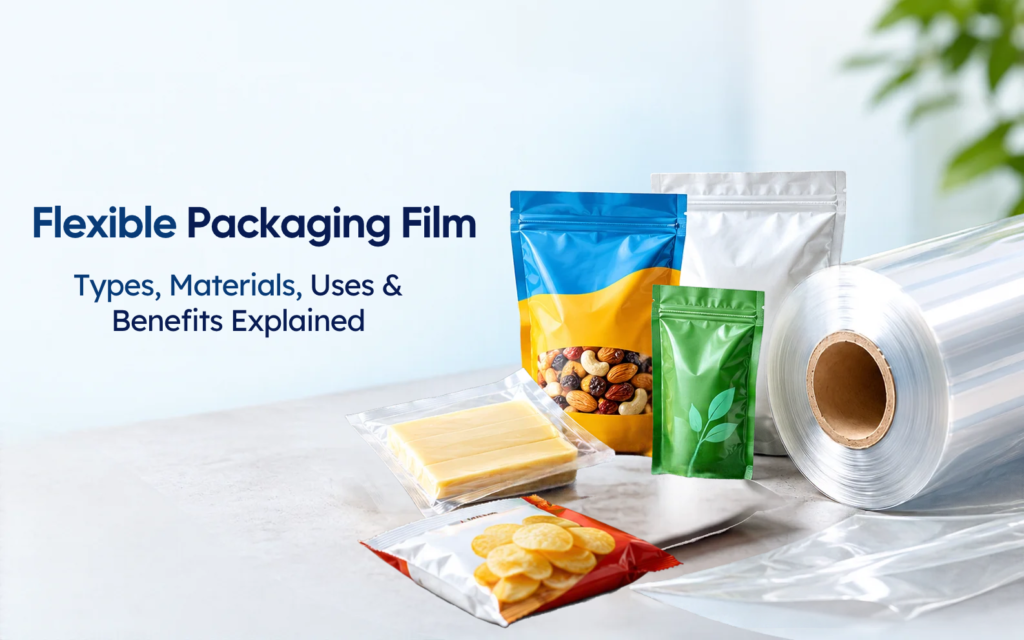
Flexible Packaging Film: Types, Materials, Uses & Benefits Explained
If you have ever launched a new product, selected packaging materials, or worked with a packaging manufacturer, you have probably come across this question:
“Which flexible packaging film is right for my product?”
At first glance, packaging films may seem similar. They come in different thicknesses, finishes, and material combinations. But in reality, each type offers different levels of strength, flexibility, moisture resistance, printability, and product protection.
Think about the last snack packet, detergent pouch, or food wrapper you used. The packaging film helped protect the product, preserve its quality, and make the storage and transportation much easier. That's why The right material can also improve shelf appeal and reduce unnecessary packaging weight.
That’s why manufacturers use to carefully evaluate flexible packaging films before finalising their packaging structure. Materials such as BOPP, PET, PE, and CPP each serve specific packaging requirements across food, pharmaceutical, personal care, and industrial applications.
As demand grows for lightweight, cost-effective, and resource-efficient packaging, choosing the right film has become increasingly important for businesses.
Let’s explore the types, materials, uses, and benefits of flexible packaging film.
What Is Flexible Packaging Film?
Flexible packaging film is a thin, flexible material which is used to wrap, protect, store, and transport products across various industries. It is commonly manufactured from plastic polymers such as polyethylene (PE), polypropylene (PP), polyester (PET), and BOPP.
These films can also be used individually or combined into multiple layers to achieve specific properties, including moisture resistance, oxygen barriers, heat sealability, and durability.
Flexible packaging films are widely used in food packaging, pharmaceutical products, personal care items, and industrial goods because they offer lightweight protection, efficient storage, and versatile printing options.
Types of Flexible Packaging Film That Are Being Used in Packaging
Flexible packaging films are available in different materials, each designed to meet specific product protection, shelf-life, printing, and sealing requirements. Here are 10 commonly used types of flexible packaging film and their applications.
1. Polyethylene (PE) Film
Polyethylene film is widely used because of its major features like flexibility, moisture resistance, and excellent heat-sealing properties. It is commonly used in shopping bags, milk pouches, detergent packaging, frozen food bags, and laminated packaging structures.
2. BOPP Film
Biaxially Oriented Polypropylene (BOPP) film offers excellent clarity, stiffness, printability, and moisture resistance. It is also popular for packaging used for products like snack packets, biscuit wrappers, confectionery packaging, and product labels.
3. CPP Film
Cast Polypropylene (CPP) film provides a good heat-sealing performance, with flexibility, and resistance to tearing. This film is widely used in food packaging, bakery products, textile packaging, and as a sealing layer in multilayer packaging.
4. PET Film
Polyethylene Terephthalate (PET) film is known for its high strength, dimensional stability, transparency, and it's durability. It is commonly used in laminated pouches, beverage packaging, ready-to-eat food packs, and pharmaceutical packaging.
5. Nylon / Polyamide Film
Nylon film offers excellent puncture resistance, toughness, and flexibility. This is particularly suitable for vacuum packaging, meat products, cheese packaging, and applications that require high protection against mechanical damage.
6. EVOH Film
Ethylene Vinyl Alcohol (EVOH) film provides an excellent oxygen and aroma barrier properties. This film is mostly incorporated into multilayer packaging for processed foods, meat products, dairy items, and products requiring extended shelf life.
7. Metallized Film
Metallized film also features a thin metal coating, usually aluminium, that improves light, moisture, and oxygen barrier performance. It is widely used for chips, coffee, confectionery, and premium snack packaging.
8. PVC Film
Polyvinyl Chloride (PVC) film offers transparency, flexibility, and cling properties. It is used in selected food wraps, shrink packaging, and retail product packaging, depending on application-specific regulations.
9. Paper-Based Flexible Film
Paper-based flexible packaging combines paper with barrier coatings or other materials to improve functionality. It is used for tea bags, dry food pouches, sachets, and sustainable packaging applications.
10. High-Barrier Flexible Film
High-barrier films combine multiple materials or specialised coatings to minimise oxygen, moisture, and light transmission. They are suitable for pharmaceuticals, coffee, sensitive food products, and other applications requiring enhanced product protection.
Uses of Flexible Packaging Film
Flexible packaging film is used across a wide range of industries because it offers lightweight protection, convenient storage, efficient transportation, and versatile printing options.
From everyday food products to sensitive pharmaceutical goods, the right packaging film helps maintain product quality while meeting specific storage and handling requirements.
1. Food Packaging
Flexible packaging film is widely used for chips, biscuits, frozen foods, spices, snacks, dairy products, and ready-to-eat meals. Materials such as BOPP, PET, and PE help provide moisture resistance, sealing performance, and freshness protection.
2. Beverage Packaging
Packaging films are used in juice pouches, liquid sachets, milk packaging, and beverage concentrate packs. Multilayer films help prevent leakage and maintain product quality during storage and distribution.
3. Pharmaceutical Packaging
Pharmaceutical manufacturers use flexible films for medicine sachets, strip packaging, powder pouches, and medical product packaging. High-barrier films help protect sensitive products from moisture, oxygen, and contamination.
4. Personal Care and Cosmetics
Shampoo sachets, face mask packs, cosmetic refill pouches, and skincare sample packaging commonly use flexible films for product protection and attractive presentation.
5. Home Care Products
Detergent powders, liquid cleaners, fabric conditioners, and household cleaning products use flexible packaging films for convenient handling and secure sealing.
6. Agriculture and Agrochemical Packaging
Flexible films are used for fertiliser bags, pesticide sachets, seed packaging, and agricultural chemical pouches, with material selection based on product compatibility and safety requirements.
7. Industrial Packaging
Industrial applications include protective liners, component bags, chemical pouches, and packaging for raw materials.
Overall, flexible packaging film helps businesses improve product protection, storage efficiency, and packaging performance across diverse applications.
Benefits of Flexible Packaging Film
Flexible packaging film offers several advantages for manufacturers, retailers, and consumers. Its combination of lightweight materials, protective properties, printing flexibility, and adaptable formats makes it a practical solution for packaging products across multiple industries.
1. Lightweight
Flexible films weigh less than many rigid packaging materials, helping reduce packaging weight and improve handling efficiency.
2. Cost-Effective
Lower material requirements and efficient production processes can help businesses manage packaging costs and reduce distribution expenses.
3. Excellent Product Protection
Depending on the material structure, flexible films protect products against moisture, dust, oxygen, light, and external contamination.
4. Extended Shelf Life
Barrier films help preserve freshness, flavour, aroma, and product quality by limiting exposure to environmental factors.
5. High-Quality Printing
Flexible packaging films support vibrant colours, sharp graphics, and detailed product information, helping brands create attractive shelf presentations.
6. Flexible Packaging Formats
These films can be converted into pouches, sachets, wrappers, bags, roll stock, and laminated packaging structures for different requirements.
7. Easy Storage and Transportation
Their lightweight, compact formats can improve warehouse utilisation and simplify product transportation.
8. Consumer Convenience
Features such as resealable closures, easy-tear openings, and portion-sized sachets make products easier to use and store.
9. Customization
Manufacturers can customise film thickness, dimensions, finishes, barrier properties, and printing according to product specifications.
10. Material Efficiency
Flexible packaging can use less material than some rigid alternatives, reducing packaging weight. Actual material savings depend on the product and packaging design.
Overall, flexible packaging film helps businesses balance product protection, visual appeal, operational efficiency, and cost management while meeting diverse packaging requirements.
Conclusion:
However, choosing the right flexible packaging film requires careful consideration of product compatibility, barrier performance, durability, printing requirements, and budget.
Looking for reliable flexible packaging solutions for your business? Connect with SatyendraPackagingLtd. to explore packaging materials and solutions that align with your product requirements, operational needs, and quality expectations.
As packaging technology continues to evolve, businesses must also consider material efficiency, recyclability, and sustainability when selecting packaging structures. The right choice can help manufacturers protect their products while improving packaging performance throughout the supply chain.
Recent Blogs
- Top Packaging Manufacturers That Export to USA Importers and Brands
- Ventilated FIBC Bags: A Bulk Packaging Solution for Heat-Sensitive Products
- Top Reasons to Source FIBC Bags from Indian Manufacturers
- BOPP Packaging Film vs CPP vs PET Film: Which Packaging Material Wins?
- PP Woven Bags for Packaging: Types, Uses, Benefits & Manufacturing Process
- Top UV Masterbatch Manufacturer for Agriculture & Industrial Applications
- FIBC Bulk Bags Unloading Guide: Essential Equipment, Safety Checks, and Techniques
- Super Sack Bags Guide: Sizes, Materials, Capacity, and Industrial Uses
- The Ultimate Guide to Tunnel Bags for Cement and Construction Industry
- Non Woven Bags: A Smart Packaging Move That Boosts Sales & Sustainability
- FIBC Jumbo Bags Handling Guide: 8 Expert Tips to Prevent Accidents & Loss
- Woven Polypropylene vs. Paper Bags: Which is Best for Heavy-Duty Industrial Use
- What Is Masterbatch? Types, Advantages, and Role in Plastic Industry
- Ventilated Bulk Bags Explained: Design, Durability, and Real-World Applications
- Pinch Bottom Bags: Why Brands Are Switching to This Smart Packaging?
- FIBC vs. Rigid Containers: Which One Delivers Better ROI for Bulk Transport?
- The Rise of Flexible Packaging: What Manufacturers and Startups Must Know
- What Is PP Multifilament Yarn? Benefits, Uses, and Industry Applications
- Polypropylene (PP): Uses, Benefits, and Applications in Packaging Industry
- Leno Bags: A Stronger Packaging Backbone for India’s Farm Produce Market
- The Ultimate Guide to Choosing the Geotextile Fabric for Your Project
- Top 6 Best Packaging Materials for Bulk Goods: Strong & Sustainable
- What is Flexible Packaging? The Smart Choice for FMCG Export & Supply
- Complete Guide to FIBC Bags – Types, Uses, and Benefits You Should Know
- BOPP Laminated Woven Bags Benefits | Satyendra Packaging
- Innovative BOPP Film | Satyendra Packaging Ltd Manufacturing
- BOPP Pinch Bottom Bags | Reliable Custom Packaging
- BOPP Laminated PP Woven Sacks | Durable Custom Packaging
- Leno Bags for Fresh Produce – Breathable & Durable Packs
- PP Woven Fabric: Meaning, Properties & Applications Guide
- FIBC Jumbo Bags: Uses, Benefits & More | Satyendra Packaging
- Top 5 Benefits of Woven Geotextile Fabrics in Roads
- High-Quality BOPP Film Packaging | Satyendra Packaging India
- Are BOPP Films Safe for Food Packaging? | Satyendra Group
- Are FIBCs Recyclable? A Guide to Sustainable Bulk Bags
- BOPP/PP Block Bottom Bags: Types, Benefits & Industry Uses
- Why PP Multifilament Yarn is Essential for Multiple Industries
- Boost Your Business with BOPP Bags
- Knitted Geotextiles: Game-Changer in Civil Engineering Solutions
- How Flexible Packaging Solutions Help to Grow Business
- FIBC Bags: The Versatile Solution for Bulk Material Handling
- Types of Flexible Packaging and Their Advantages
- Reasons Why PP Leno Mesh Bags Are the Best Choice for Produce Packaging
- Why BOPP Laminated PP Woven Bags Are Right For Your Business?
- Woven Polypropylene Bags: The Complete Guide
- Exploring the Benefits of FIBC Bulk Bags: A Practical Guide